
Funny Until It Isn’t
Updated: May 6
I make memes because sometimes people will engage with a joke faster than they will engage with the truth. This work is not funny, but the absurdity of how people respond to it often is. In Bristol, Rhode Island, people love to talk about supporting local businesses, community, inclusion, and doing the right thing, but that energy shifts quickly when the conversation turns to Mount Hope Farm, plantation history, Indigenous land theft, slavery, and who is still benefiting from it.

What I keep seeing is that people are often not actually upset that history was whitewashed. They are upset that someone said it out loud. They are not angry that stolen land and slavery-built wealth were turned into wedding venues, markets, and polished community spaces. They are angry when someone refuses to keep pretending that is normal. The discomfort does not come from the history itself. It comes from the interruption of the story they have been allowed to move through without question.

Rhode Island has a very specific habit of treating plantation culture like a Southern problem, as if racism and slavery belong somewhere else. They do not. We just gave ours better branding. Mount Hope Farm is marketed as a charming coastal venue, a beloved farmers market, and a symbol of local community, but it is also sacred Pokanoket land shaped by war, forced removal, and continued displacement. That truth is not made plain and people are not given the full context when they book weddings there, vend there, partner there, or publicly defend it.
I partnered with Mount Hope Farm myself because I was given the polished version too. Like many people, I was handed the curated story built for comfort, bookings, and community approval. Once I learned the deeper history and tried to confront it, I was rejected. That experience is exactly why I keep speaking about this publicly. People deserve informed consent before they decide to celebrate there, work there, or attach their name to that space and others like it.

You should know if a venue sits on sacred stolen land. You should know if its surrounding wealth and legacy are tied to slavery and Indigenous displacement. You should not have to uncover that through private research, whispered conversations, or public conflict. That information should be clear, honest, and offered directly by the people profiting from the space. It is not, and that is not accidental. Silence protects business, and partial history protects comfort.

What has been most revealing is how quickly people will defend a business before they will examine harm. “Support local” becomes the shield people hide behind, as if being a small business creates moral immunity. Accountability gets treated like aggression, and truth gets framed as being divisive or unkind. People will say they stand against harm until that stance threatens a friendship, an invitation, a business relationship, or access to a room they want to stay inside. That is when values get tested, and too often comfort wins.

For many BIPOC people, none of this feels surprising. There is a particular exhaustion in watching people debate whether something is harmful when your community has already been carrying the impact of it. There is a deep frustration in watching institutions be protected faster than people, and in watching allyship disappear the second accountability becomes inconvenient. What many call conflict is often just the moment someone stops agreeing to silence.
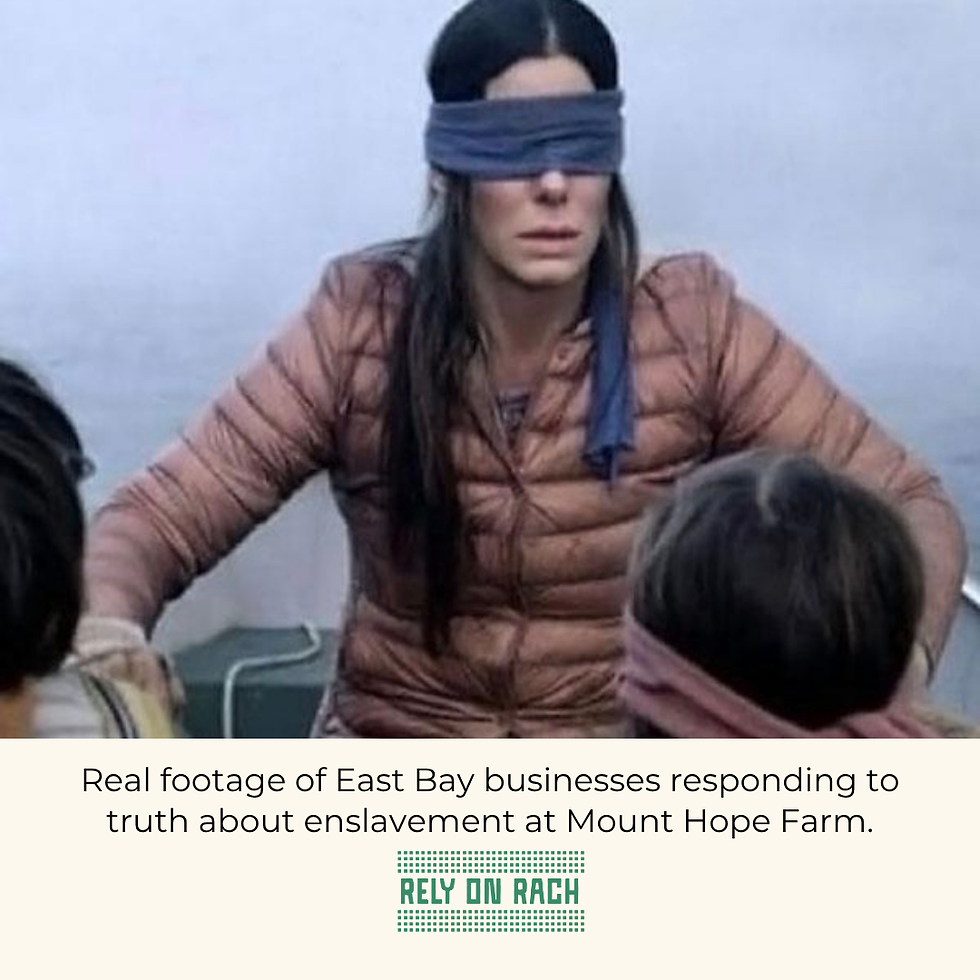
That is why I'm making the memes. They are not there to make light of the issue. They are there because humor can expose absurdity faster than a formal essay can. Sometimes a single image can reveal the contradiction more clearly than ten paragraphs. People who would scroll past a direct critique will stop for a meme, laugh and realize they are looking directly at themselves.

Friends do not let friends host events on plantations, no matter where that plantation is. Yes, even in Rhode Island. And yes, even if it hosts the farmers market. Even if it is beautiful. Especially then. If we are going to participate in these spaces, we should at least be honest about what we are participating in.

Comments